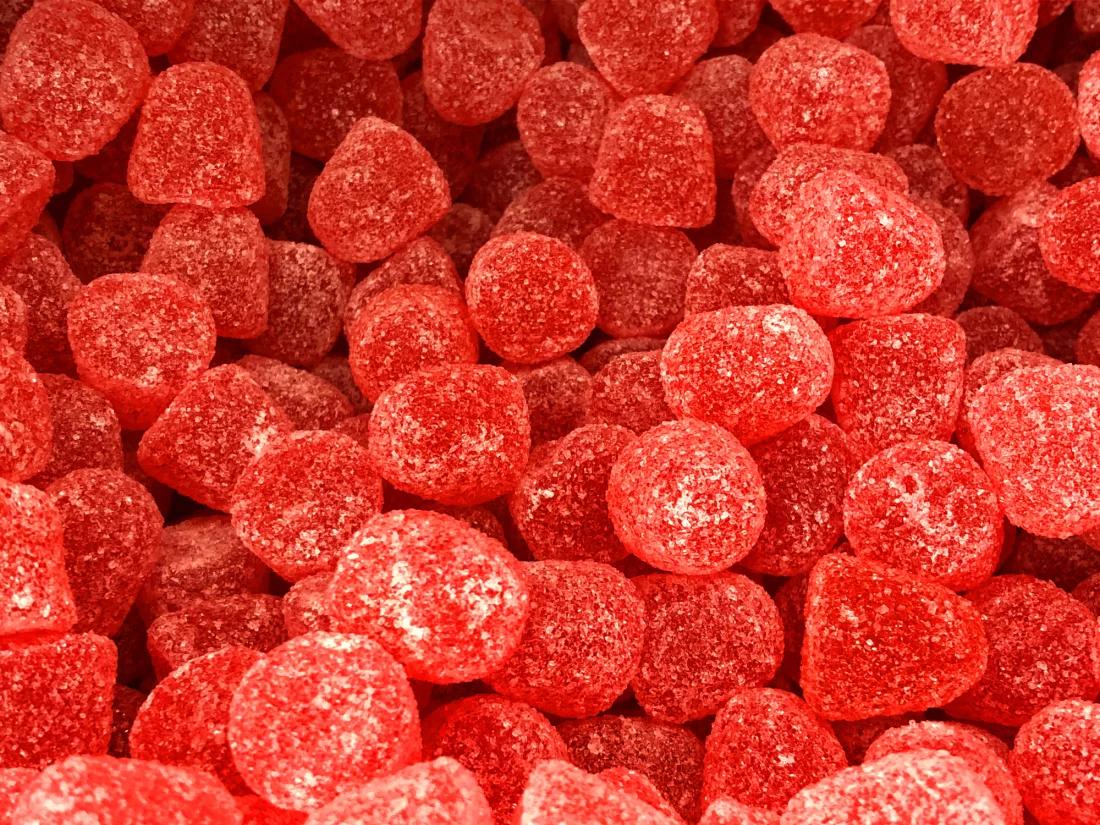
If you've been seeing news about California banning Red Dye No. 3 (erythrosine) and wondering what all the fuss is about, here’s a simple breakdown. It all traces back to a 1990 study on rats (Jennings et al., 1990) that found this dye could affect the thyroid, a gland responsible for regulating many essential functions in the body.
What Did the Study Find?
🔹 Thyroid hormone changes – Rats that consumed large amounts of erythrosine showed altered levels of hormones that regulate the thyroid. Essentially, their bodies got confused about how much hormone to produce.
🔹 Blocking a key enzyme – The dye prevented the body from properly converting one thyroid hormone (T4) into its active form (T3). As a result, the thyroid gland received signals to work overtime.
🔹 Thyroid tumors? – Since the thyroid was constantly overstimulated, the rats developed a higher risk of abnormal growth in that area (hyperplasia and tumors).
Is This a Problem for Humans?
That’s the million-dollar question. The study was conducted on rats, not humans, and the doses of erythrosine they received were ridiculously high .
To put it into perspective:
✅ The lowest dose in the study was 300,000 times higher than what a person would normally consume. ✅ The highest dose was 2.4 million times higher .
It’s like comparing the effect of drinking a glass of water to jumping into a pool filled with water— context matters .
Should We Be Worried?
There’s no direct evidence that Red Dye No. 3 causes health issues in humans at normal consumption levels, but the FDA decided the industry shouldn’t take the risk—and that’s a good thing.
These regulatory changes might spark debate, but we celebrate them because they push the food industry to innovate . It’s not just about replacing an ingredient like color or flavor—it’s about creating alternatives that improve people’s quality of life.
That’s what we do at NotCo . We have the technology to find better alternatives . Our science and technology team uses Giuseppe, our proprietary AI platform , to analyze and develop safer, more natural substitutes for Red Dye No. 3. We can make food that’s delicious, visually appealing, and worry-free.
Why not?
By: Rodrigo A. Contreras, Ph.D Scientific Research Sr. Manager, The Not Company.
References
Jennings, A. S., Schwartz, S. L., Balter, N. J., Gardner, D., & Witorsch, R. J. (1990). Effects of oral erythrosine (2',4',5',7'-tetraiodofluorescein) on the pituitary-thyroid axis in rats. Toxicology and Applied Pharmacology, 103(3), 549–556. https://doi.org/10.1016/0041-008X(90)90327-Q